Crochet a Cozy Granny Square Blanket: Free Pattern, Sizes and Winter 2026 Colors
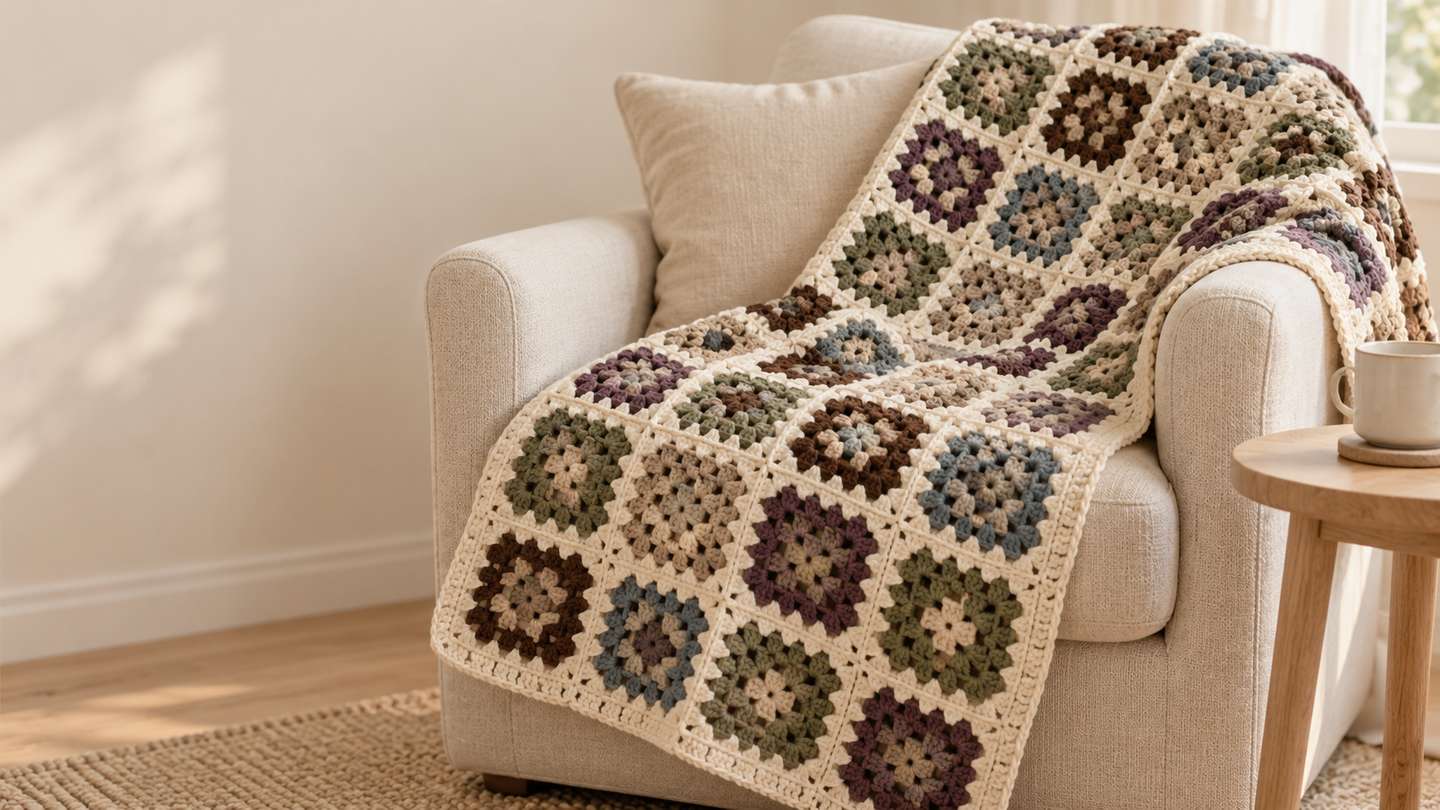
In short
A granny square blanket is the perfect winter project, even for beginners: you crochet lots of identical squares from double crochet clusters, join them and finish with a single crochet border. With worsted weight yarn and a 5 mm (H-8) hook, one square measures about 15 cm (6 in) after 6 rounds (approximate); a lap blanket of about 90 × 120 cm (35 × 47 in) then takes 48 squares. Below you'll find the free pattern with stitch counts for every round, a size chart and the winter 2026 colors.
When it gets dark early, few things beat a project that grows on the couch and later keeps you warm in exactly the same spot. A whole blanket sounds like a lot of work – but with granny squares it comes together in small steps: one square in the evening, a few on the weekend, and suddenly there's a whole stack in front of you. In this post you'll learn which blanket styles to choose from, which colors are trending this winter, how to plan size and yarn – and how the classic granny square works, round by round.
1. Why is a blanket the perfect winter project?
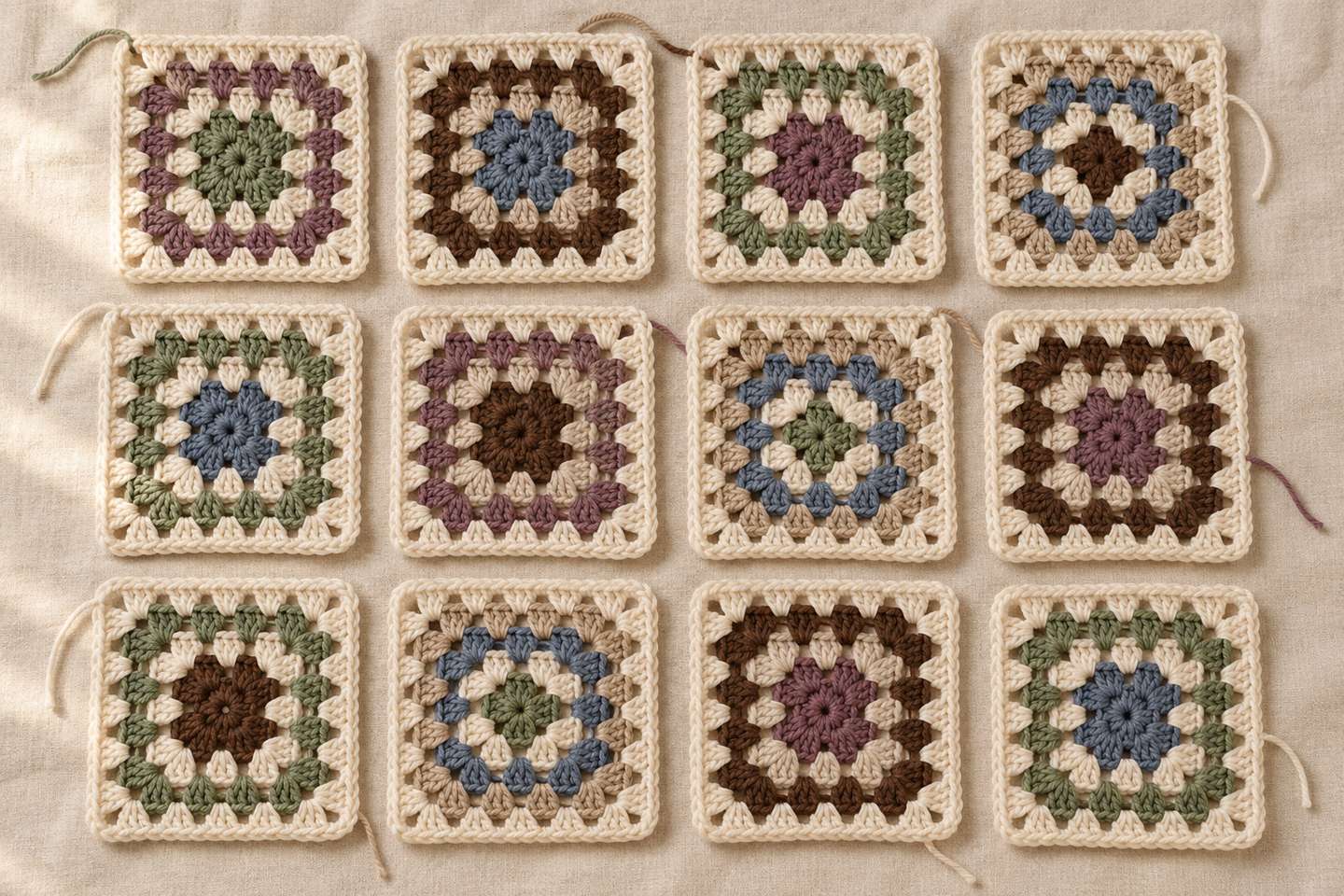
In its 2026 seasonal guide, the knitting and crochet tool maker KnitPro lists oversized blankets and afghans first among four typical winter projects and recommends worsted and bulky weight yarns in merino or wool blends, because they trap warmth while staying soft (see sources). A blanket made from squares has practical perks, too:
- Bite-sized: every square is a small, finished win – ideal for short evenings.
- Scrap-friendly: colorful centers from leftover yarn plus one shared color for the last round, and it all looks like it belongs together.
- Portable: one ball of yarn, a hook and a few squares fit in any bag.
- Simple stitches: all you need is a magic ring, chains, double crochet and slip stitches – all covered in the crochet basics.
2. Which blanket style is right for you?
| Style | How it works | Level | Great for |
|---|---|---|---|
| Granny square blanket | Lots of small squares made from dc clusters, joined at the end | Beginner | Scraps, crocheting on the go, colorful blankets |
| Striped blanket in rows | Worked row by row, e.g. in dc or sc, with color changes | Beginner | Calm, simple blankets with no seaming |
| Temperature blanket | Each row stands for one day; the color depends on that day's high temperature | Beginner, needs stamina | A year-long project starting January 1 |
| Mosaic blanket | Graphic two-color designs created by dropping stitches into earlier rows | Intermediate | Anyone who loves working from a chart |
According to KnitPro, the granny square has long moved beyond its traditional blanket roots into vests, cardigans and bags – but a blanket is still the easiest way in, because every square is the same. A temperature blanket is a lovely idea for the new year: as the TV station KSAT explains, it's a visual record of the weather where you live – one row per day, colored by the daily high. In its 2026 color trend post, the retailer Hooks & Needles suggests its own color ranges for temperature blankets (see sources).
Tip: Planning a 2027 temperature blanket? You have until New Year's Day to pick your colors and temperature ranges and buy the yarn.
3. Which colors are trending in winter 2026?
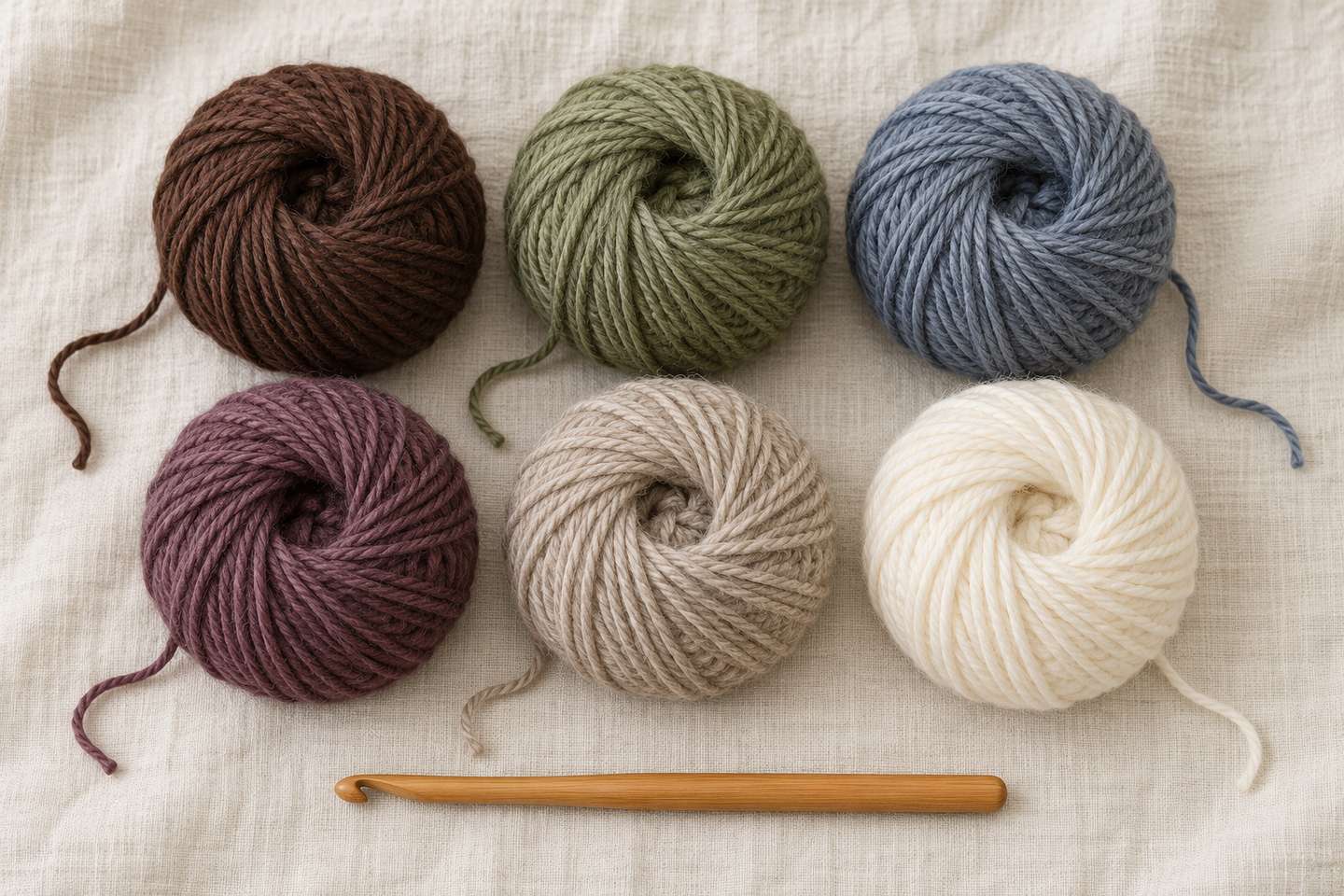
The crochet blog Sweet Softies describes a calm, warm palette for fall and winter 2026: instead of bright holiday red, many crocheters reach for softer shades. Its picks include browns like chocolate, cocoa, cinnamon and caramel; forest green, moss and olive; cool blues like denim, slate and muted navy; muted purples like plum and dusty lavender – specifically suggested for throw blankets – plus neutrals like cream and oatmeal (see sources). Here's the blanket palette I put together from that:
- Chocolate
- Moss
- Slate blue
- Plum
- Oatmeal
- Cream
Tip: Work the centers of your squares in changing colors, but the last round of every square in the same light shade (e.g. oatmeal or cream). That way even a scrappy blanket looks calm and cohesive.
4. How big will your blanket be – and how many squares do you need?
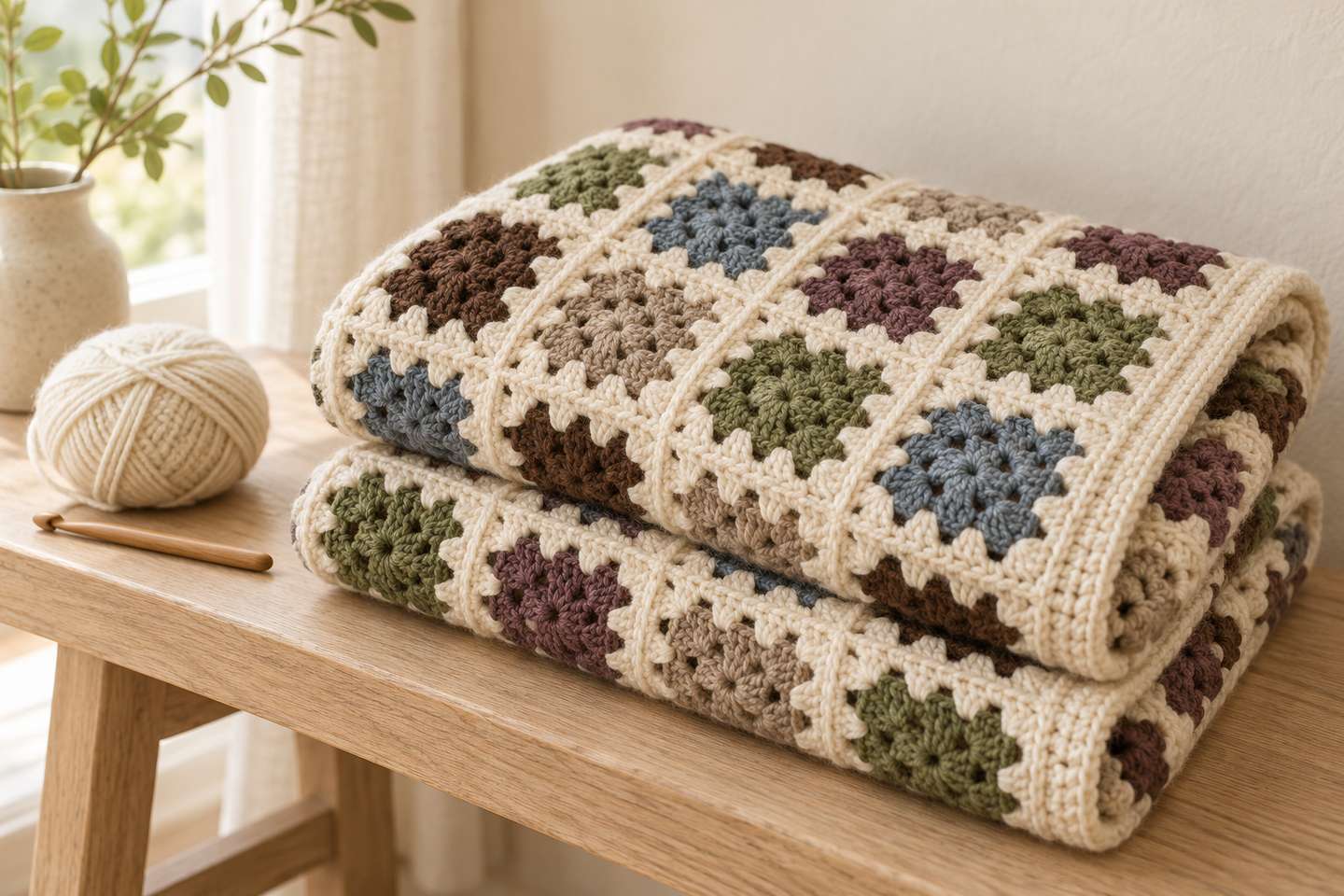
The chart assumes squares of about 15 cm (6 in) per side. The border adds roughly 1–2 cm (½–¾ in) all around. Make one test square first, measure it and adjust the math to your own size if needed.
| Blanket | Squares (width × length) | Total | Size without border |
|---|---|---|---|
| Baby blanket | 5 × 6 | 30 | approx. 75 × 90 cm (30 × 35 in) |
| Lap blanket | 6 × 8 | 48 | approx. 90 × 120 cm (35 × 47 in) |
| Throw blanket | 8 × 10 | 80 | approx. 120 × 150 cm (47 × 59 in) |
How to estimate your yarn
Yarn amounts vary a lot with yarn and tension. The most reliable method: weigh one finished square on a kitchen scale, multiply by the number of squares and add about 10–15 % for joining and the border. Example: if your square weighs 12 g, a lap blanket needs 48 × 12 g = 576 g, so about 650 g (23 oz) with a buffer. Try to buy all skeins of one color from the same dye lot (printed on the label).
Pattern: classic granny square and blanket
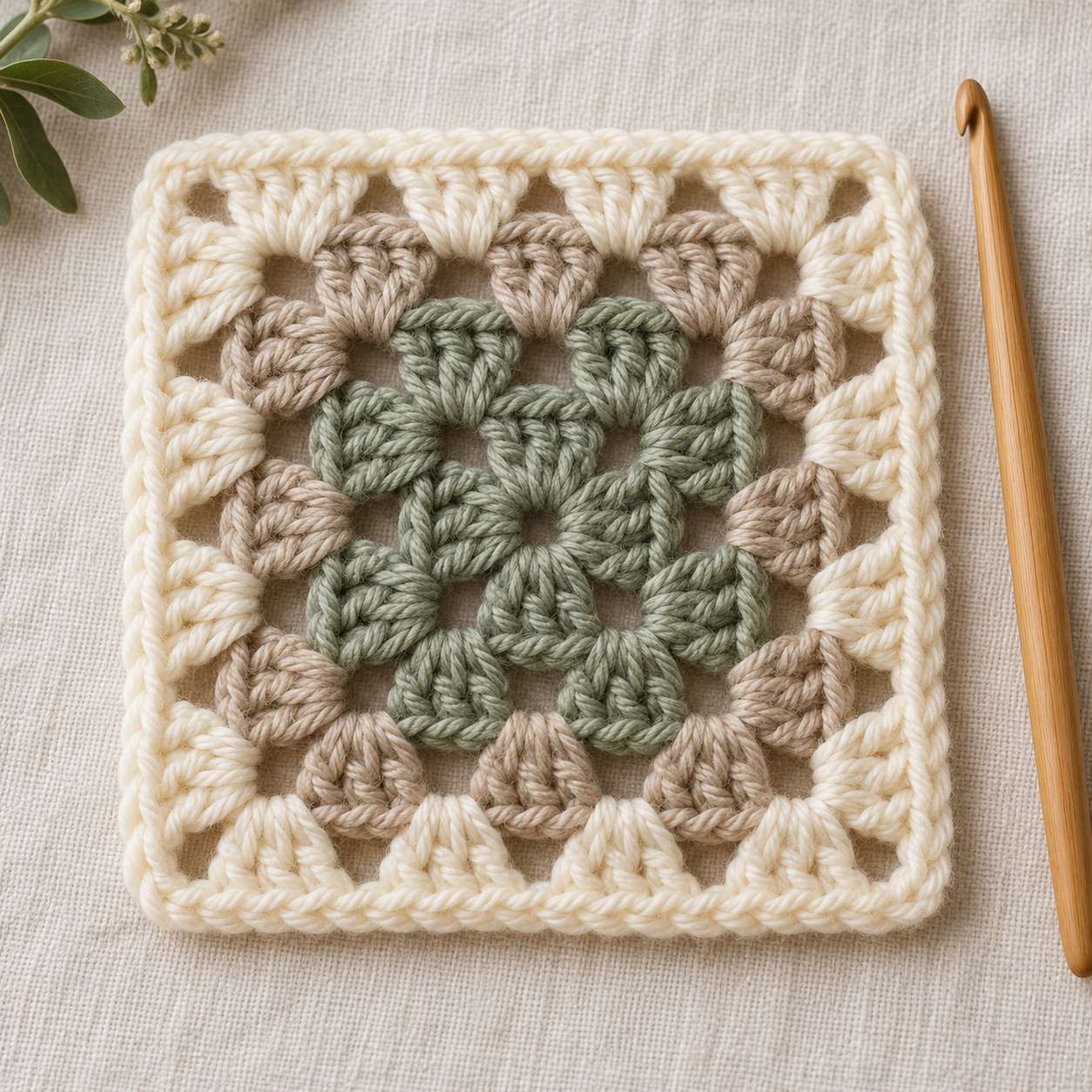
- Size
- square approx. 15 cm (6 in) after 6 rounds; blanket see chart
- Time
- approx. 30 minutes per square, plus joining and border
- Level
- beginner (magic ring, chain, double crochet, slip stitch)
- Yarn
- worsted weight (medium to bulky), amount per the weighing method above
- Supplies
- 5 mm (H-8) hook or as per label, tapestry needle, scissors, tape measure, kitchen scale
Abbreviations (US terms)
MR = magic ring · ch = chain · dc = double crochet · sl st = slip stitch · sc = single crochet · corner space = ch-2 space at a corner · corner = 3 dc, ch 2, 3 dc in the same corner space. Find every abbreviation in the abbreviations guide. You work in rounds without turning.
Granny square (rounds 1–6)
- Round 1: MR, ch 3 (counts as first dc), 2 dc into the ring, ch 2, *3 dc, ch 2* 3 more times. Pull the ring closed and join with a sl st to the 3rd ch of the beginning ch-3 (12 dc, 4 corner spaces)
Move over (at the end of every round): sl st into each of the next 2 dc and sl st into the corner space. You are now in a corner. - Round 2: In the corner space ch 3 (= first dc), 2 dc, ch 2, 3 dc. *Ch 1, corner in the next corner space* 3 times. Ch 1, join with a sl st to the 3rd ch, move over (24 dc = 8 clusters)
- Round 3: First corner as in round 2. *Ch 1, 3 dc in the ch-1 space, ch 1, corner* 3 times. Ch 1, 3 dc in the last ch-1 space, ch 1, sl st, move over (36 dc = 12 clusters)
- Round 4: First corner, then along each side 3 dc in every ch-1 space, separated by ch 1; a corner in every corner space. Sl st, move over (48 dc = 16 clusters)
- Round 5: as round 4 – each side gains one cluster per round (60 dc = 20 clusters)
- Round 6: as round 4 (72 dc = 24 clusters)
Cut the yarn leaving a 15 cm (6 in) tail and weave in. Measure your square: if it's clearly bigger than 15 cm (6 in), go down a hook size; if it's smaller, add a 7th round (84 dc) or go up a hook size. What matters most is that all squares come out the same size. Changing colors: instead of moving over, fasten off and join the new color with a sl st in any corner space, then start with ch 3.
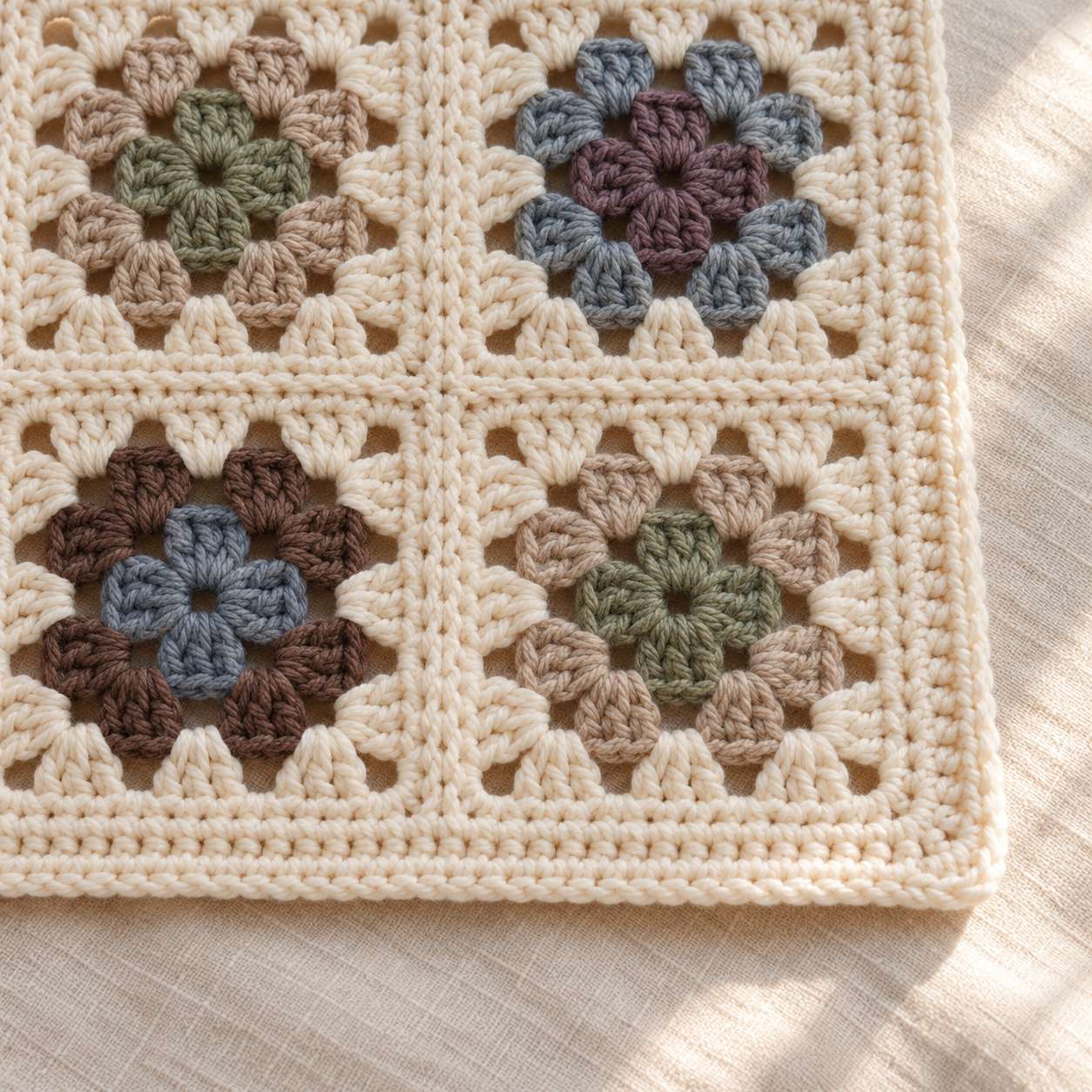
Joining and border
- Lay out all squares in the order you like and take a photo so you don't forget the arrangement.
- Place two squares right sides together. Working from corner space to corner space, sl st through the back loops of both squares – with 6 rounds that's 18 dc and 5 ch per side, so 23 sl st. Join the squares of each row into strips first, then join the strips.
- Border, round 1: Start at a corner. Work 1 sc in every dc and every ch-1 space all around, 1 sc in each corner space next to a seam, and 3 sc in the corner space of each of the four outer corners. Join with a sl st.
- Border, round 2: Ch 1, 1 sc in every sc, 3 sc in the center sc of each outer corner. Join with a sl st and weave in all ends.
- Finally, lightly dampen or steam the blanket and let it dry flat – follow the care instructions on your yarn label.
How can you vary the blanket?
- Scrap blanket: rounds 1–5 in colorful leftovers, round 6 in cream or oatmeal on every square.
- Tonal gradient: arrange the squares as an ombré, e.g. from chocolate through caramel to oatmeal.
- One giant granny: just keep going round after round – no joining at all. Each round adds 12 dc.
- 2027 temperature blanket: assign colors to temperature ranges and crochet one row every day from January 1.
With so many rounds and squares, the stitch counter helps: it counts rounds for you and remembers where you left off.
More cozy ideas
Keep reading: the best yarn for crochet beginners, my Christmas crochet ideas for 2026 and more projects for your home under home decor. Design your own squares with the pattern generator. Just learning to crochet? Start with the learning path.
What about you? Which colors are you choosing for your blanket? Show me your squares on Instagram or TikTok! 🧶
Frequently asked questions about crochet blankets
How many granny squares do I need for a blanket?
With squares of about 15 cm (6 in), a baby blanket (approx. 75 × 90 cm / 30 × 35 in) takes 30 squares, a lap blanket (approx. 90 × 120 cm / 35 × 47 in) takes 48 and a throw (approx. 120 × 150 cm / 47 × 59 in) takes 80. Make a test square first and do the math with your own size.
How much yarn do I need for a crochet blanket?
Weigh one finished square, multiply by the number of squares and add about 10–15 % for joining and the border. If one square weighs 12 g, 48 squares need about 650 g (23 oz). Buy each color from the same dye lot if you can.
What yarn is best for a cozy blanket?
For winter, worsted or bulky weight yarns work well. Merino and wool blends are warm and stay soft. If the blanket will be washed often, choose a machine-washable yarn and follow the care instructions on the label.
Why is my granny square wonky or wavy?
Common causes are a missed or doubled cluster, not joining into the 3rd chain of the beginning ch-3, or too many chains between clusters. Count after every round: round 1 has 12 dc and each round adds 12 more. A slight twist is normal and usually disappears with blocking.
What is a temperature blanket?
A temperature blanket is a visual record of the weather where you live: each row stands for one day of the year, and its color matches that day's high temperature. Many people start on January 1 and crochet one row every day.
Sources
- KnitPro: Seasonal Crochet Patterns for 2026 (winter projects and yarns)
- KnitPro: Fall 2026 Crochet Trends (granny squares)
- Sweet Softies: The Biggest Crochet Color Trends for Fall and Winter 2026 (colors)
- Hooks & Needles: 2026 Yarn Color Trends Every Crocheter Should Know (temperature blankets)
- KSAT: What is a temperature blanket and why are people crocheting or knitting them? (2024)