Crochet a Big Christmas Stocking for the Mantel – Free Pattern
In short
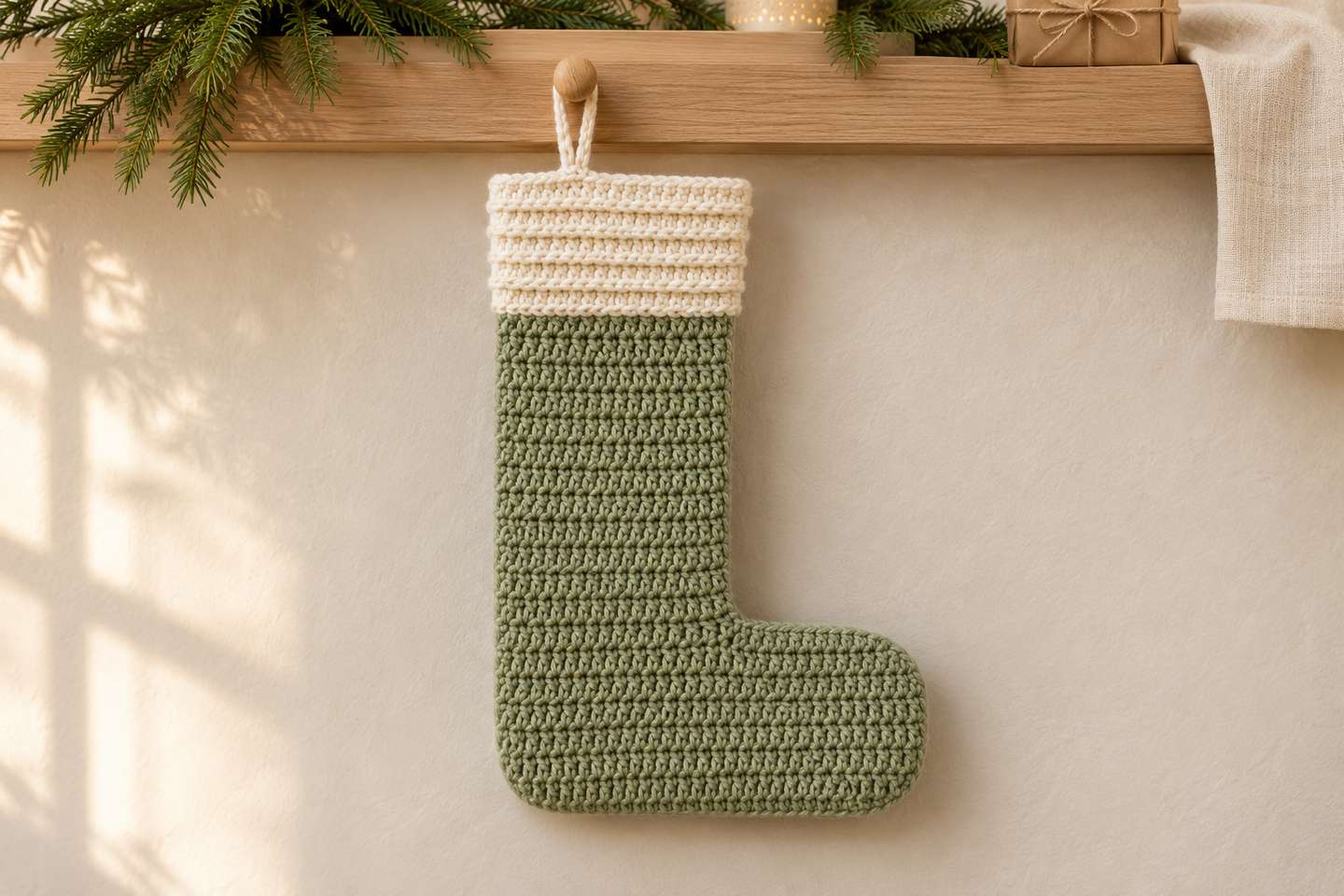
The easiest way to crochet a big Christmas stocking is from two identical panels: crochet both in rows of half double crochet from the top down, sew them together all around and add a cuff in rounds with a hanging loop. With worsted/aran weight yarn and a 5 mm (H-8) hook it comes out about 20 in (50 cm) tall (approximate). Plan on about 7–9 hours – starting in early November, two or three evenings a week get it done by December 5.
By the evening of December 5, the stocking can already be up – ideally big and on the mantel. For this big fireplace stocking you only need rows of half double crochet: two identical panels, one seam all around and a ribbed cuff. Here you'll find the free pattern with stitch counts for every row, a diagram and a schedule to finish by St. Nicholas Day.
Boot or stocking: where does the tradition come from?
St. Nicholas Day on December 6 honors Saint Nicholas, who was bishop of Myra in the 4th century. In Germany, children put polished shoes outside the door on the night before December 6, and St. Nicholas fills them.
The stocking comes from a legend of unknown origin: a widowed father couldn't afford dowries for his three daughters. Saint Nicholas secretly helped by filling their freshly washed stockings, drying by the fire, with gold coins. In a poem from 1823, stockings are already hung by the chimney for St. Nick (sources below). A big stocking combines both: hang it on December 5 instead of a boot, then keep it up until Christmas.
How big is the fireplace stocking?
| Part | Stitches / rows | Size (approx.) |
|---|---|---|
| Width (leg) | 32 hdc | about 9 in (23 cm) |
| Foot (heel to toe) | 48 hdc | about 13.5 in (34 cm) |
| Side panel | 40 rows | about 16 in (40 cm) |
| Cuff | 10 rounds | about 4 in (10 cm) |
| Total height | about 20 in (50 cm) |
Pattern: big fireplace stocking with stitch counts
- Size
- about 20 in (50 cm) tall, about 9 in (23 cm) wide, foot about 13.5 in (34 cm) (approximate)
- Time
- about 7–9 hours including sewing (approximate)
- Level
- Advanced beginner (rows of half double crochet, decreases, one round for the cuff)
- Yarn
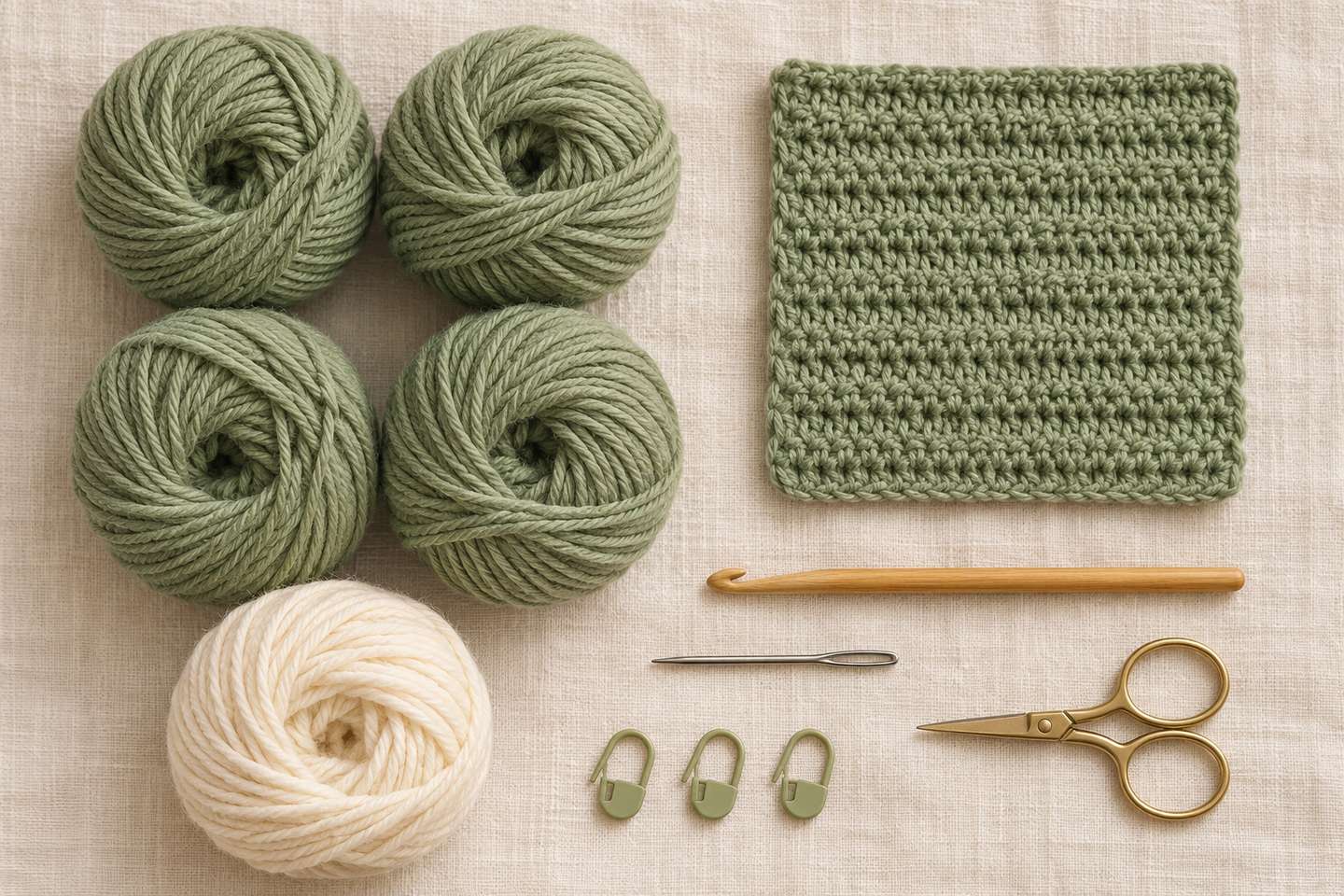
- worsted/aran weight yarn, e.g. a wool blend or cotton; an estimated 350 g (12.5 oz) in the main color and about 80 g (3 oz) in cream – buy an extra ball to be safe
- Gauge
- 14 hdc × 10 rows = 4 × 4 in (10 × 10 cm)
- Tools
- 5 mm (H-8) hook, large-eye tapestry needle, pins or stitch markers to hold the panels, scissors
Abbreviations (US terms)
ch = chain · hdc = half double crochet · sc = single crochet · sl st = slip stitch · dec = hdc2tog (half double crochet 2 together) · BLO = back loop only. All abbreviations and chart symbols are in the abbreviations guide, and rows and turning chains are explained in the crochet basics. The stitch counter makes counting rows easy.
1. Side panels (make 2 the same, main color)
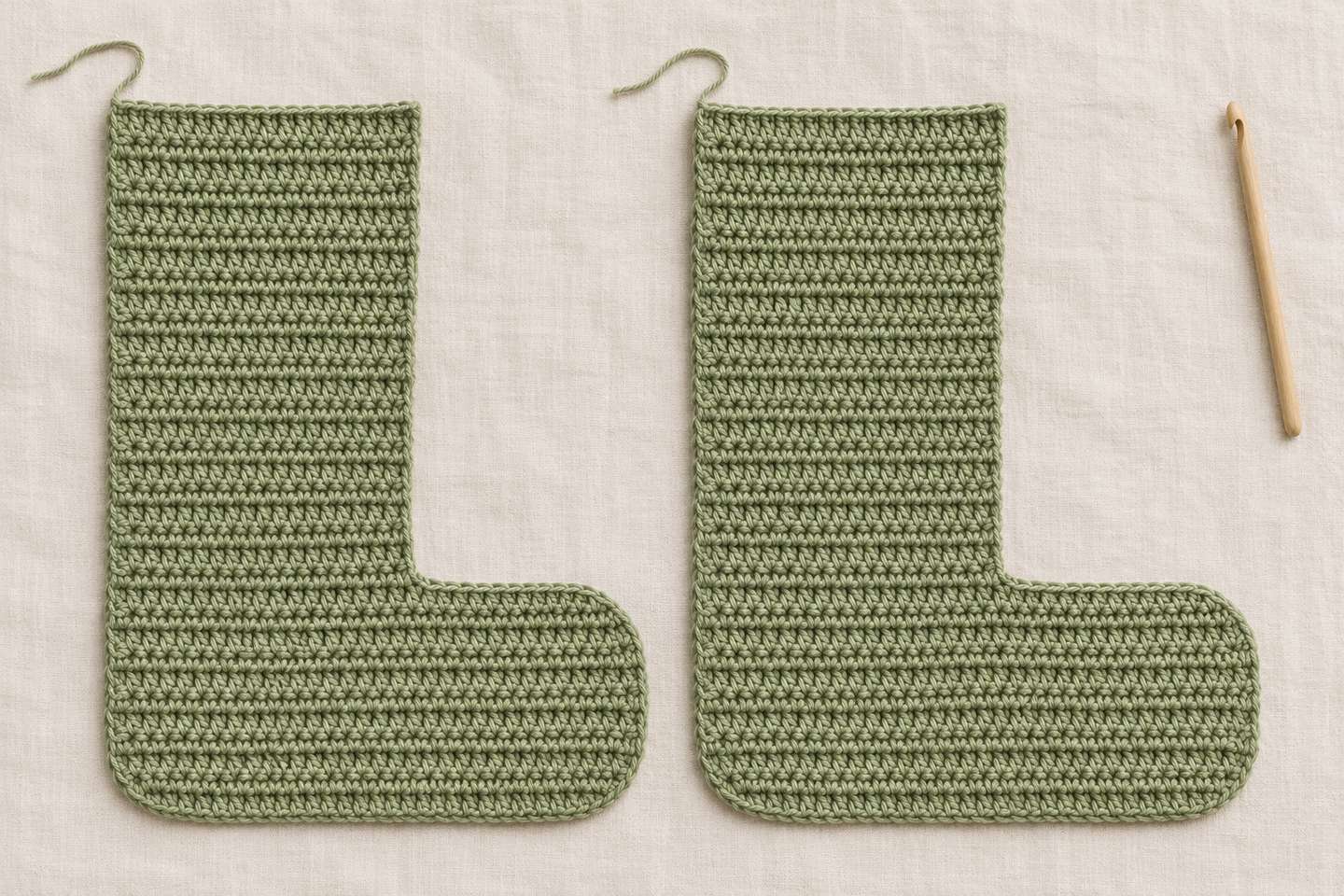
- Row 1: ch 34, starting in the 3rd ch from the hook, 32 hdc (32)
- Rows 2–26: ch 2 (does not count as a stitch), turn, 32 hdc (32)
- Row 27: ch 18, turn, starting in the 3rd ch from the hook, 16 hdc, then 32 hdc across the row (48)
- Rows 28–37: ch 2, turn, 48 hdc (48)
- Row 38: ch 2, turn, dec, 44 hdc, dec (46)
- Row 39: ch 2, turn, dec, 42 hdc, dec (44)
- Row 40: ch 2, turn, dec, 40 hdc, dec (42)
Fasten off, leaving a long tail, and make the second panel the same way. The foundation edge is the top, the side with the chain extension becomes the toe, and the opposite lower corner is the heel.
2. Sew the sides together
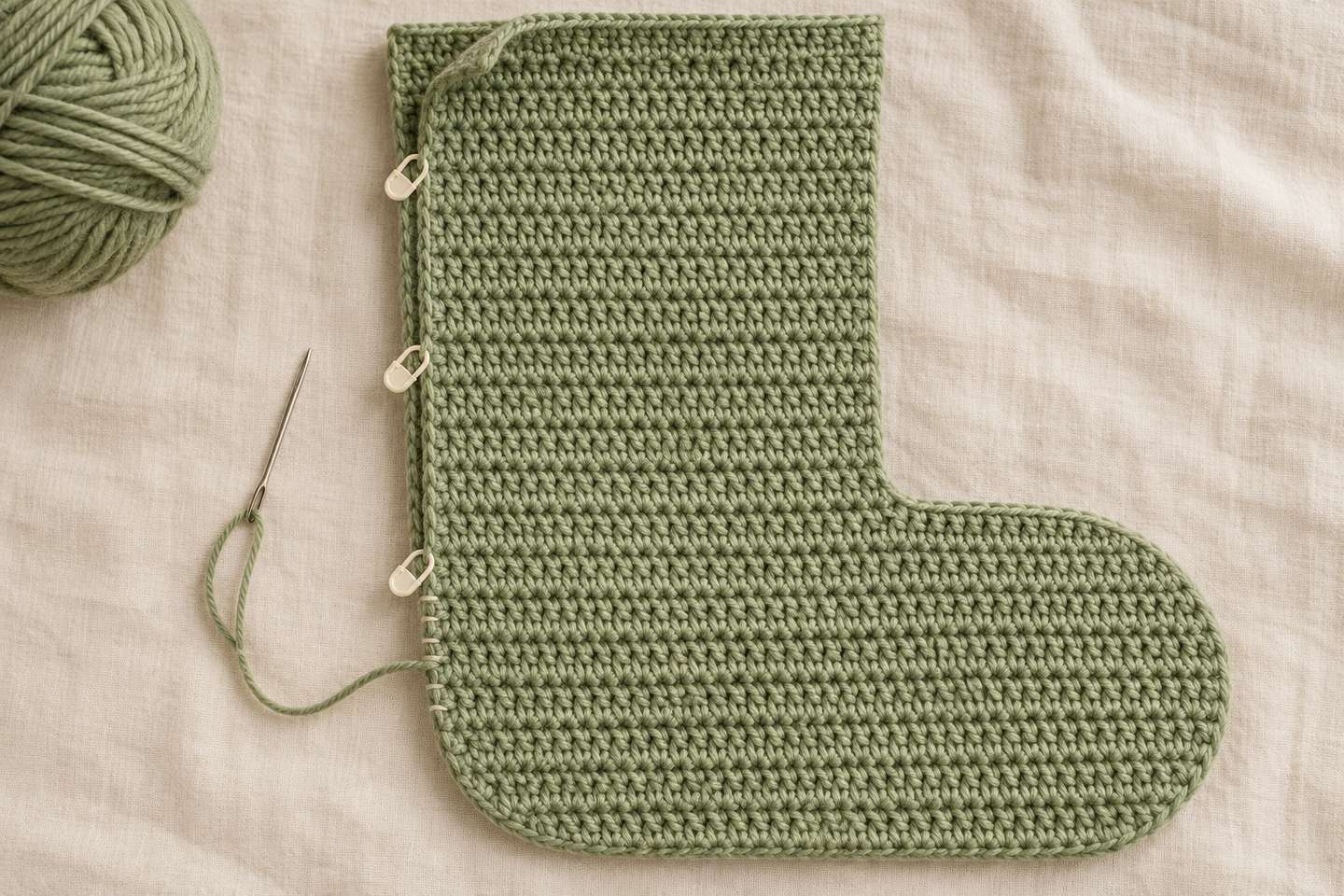
- Place both panels on top of each other so the edges line up and both toes point the same way
- With a tapestry needle and main-color yarn, whipstitch all the way around: from the top corner on the heel side over the heel, sole and toe to the top corner of the front edge
- Leave the top edge open and turn the stocking inside out so the seam is on the inside
Half double crochet looks similar on both sides – that's why you can make both panels the same. Go into every stitch around the curves so the seam doesn't pull.
3. Cuff (cream, in rounds)
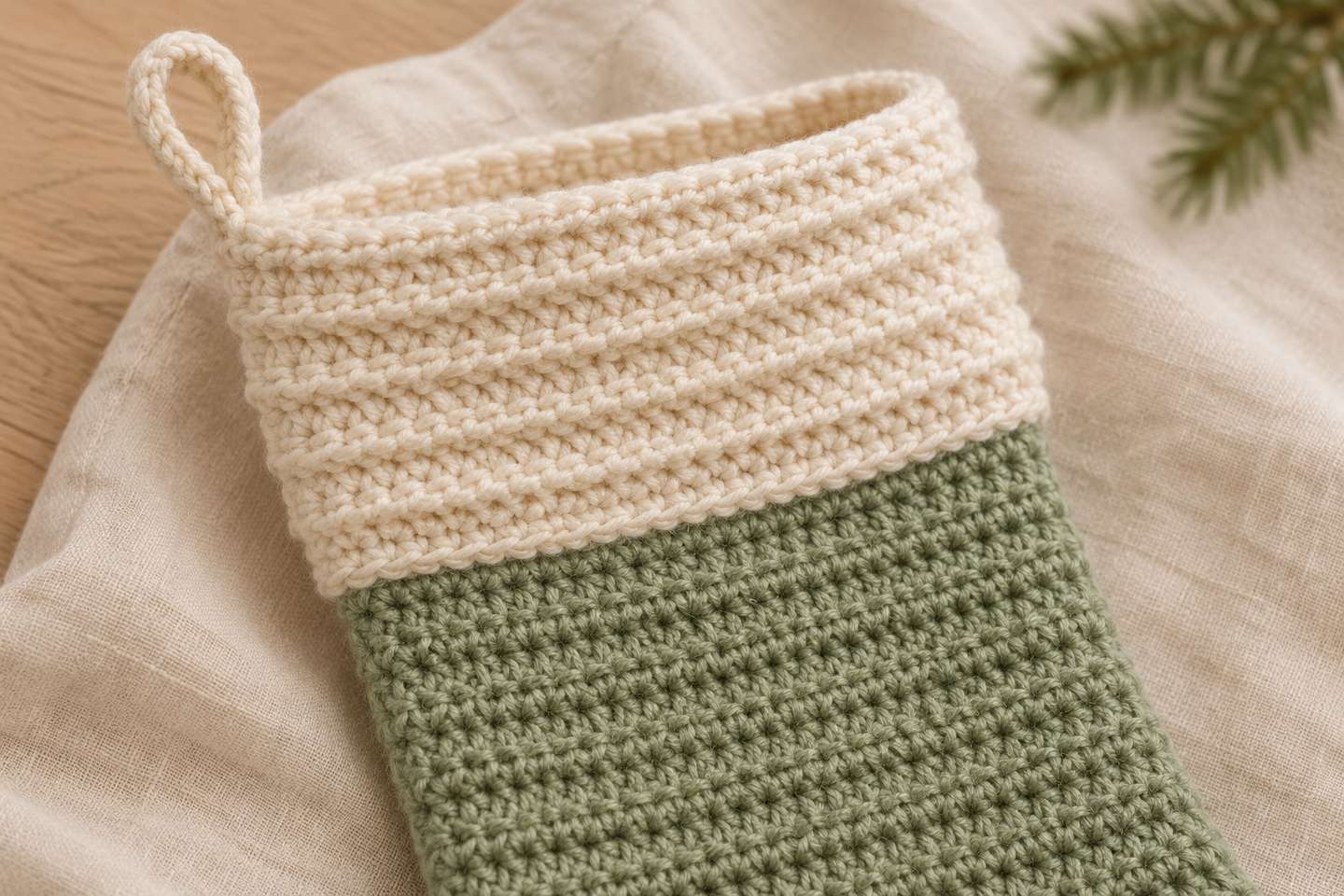
- Round 1: join new yarn at the side seam above the heel, 1 sc in each foundation stitch of both panels, join with a sl st (64)
- Rounds 2–10: ch 2 (does not count), 64 hdc in the back loop only, join with a sl st in the 1st hdc (64)
Weave in the end. Working in the back loop creates the horizontal ridges.
4. Hanging loop
- Join yarn at the top of the cuff above the heel seam, ch 20 and close with a sl st in the same stitch (loop)
- Work about 26 sc around the loop and finish with a sl st (about 26)
Weave in securely – on the mantel, the loop carries the full weight of the filled stocking.
Tip: Pin the two panels together with a few stitch markers before sewing so nothing shifts. If you'd like a name, embroider it onto the front panel with surface slip stitches before you sew the panels together.
Can I make the stocking bigger or smaller?
- Longer or shorter: work more or fewer rows in rows 2–26. Each row adds about 0.4 in (1 cm) (approximate).
- Wider or narrower: chain 1 more or fewer for each stitch you add or remove. The cuff then has twice as many stitches as one panel.
- Different yarn: thicker yarn (chunky, 6–7 mm hook) makes a bigger stocking from the same pattern, thinner yarn a smaller one.
Can I finish the fireplace stocking by December 6?
Yes, if you start now. At about 7–9 hours (approximate), two or three evenings a week are enough:
| Week | What |
|---|---|
| 1 | Gauge swatch, first panel |
| 2 | Second panel |
| 3 | Embroider a name, sew together, cuff |
| 4 | Hanging loop, weave in ends, buffer time – and hang it on December 5 |
More for the holiday season
Looking for small handmade fillers? Try the mini ornaments for an advent calendar – the bauble, star and bell fit nicely into the stocking too. The advent calendar made of 24 pouches and color ideas for all your holiday decor are in Christmas crochet 2026. Which yarn is best to start with? See the best yarn for beginners.
What about you? Will you hang a stocking on December 5 or put out a boot? Show me your fireplace stocking on Instagram or TikTok! 🎅
Frequently asked questions about crochet fireplace stockings
How do you crochet a big Christmas stocking?
Crochet two identical panels in rows of half double crochet, place them on top of each other and sew them together all around. Then add a cuff in rounds and a hanging loop at the top.
How big is the crochet fireplace stocking?
About 20 in (50 cm) tall, about 9 in (23 cm) wide, with a foot of about 13.5 in (34 cm). These are approximate sizes for a gauge of 14 hdc × 10 rows = 4 × 4 in (10 × 10 cm).
How do I sew the two panels together?
Line up the panels and whipstitch them together all around with a tapestry needle and main-color yarn. Leave the top edge open, then turn the stocking inside out.
How much yarn do I need for a big Christmas stocking?
An estimated 350 g (12.5 oz) of worsted/aran weight yarn in the main color and about 80 g (3 oz) in cream for the cuff. Buy an extra ball to be safe.
Boot or stocking – what do you put out for St. Nicholas?
In Germany, children traditionally put polished shoes outside the door on the night before December 6. A big stocking can replace the boot and stays up as decor until Christmas.